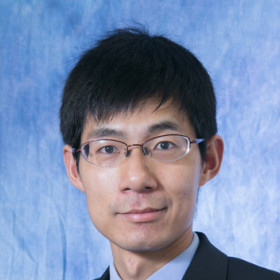
Prof. Renjie ZHOU
Department of Biomedical Engineering
The Chinese University of Hong Kong
Biography
- Associate Professor in Department of Biomedical Engineering at The Chinese University of Hong Kong
- Research interest centers around innovating optical imaging technologies and demonstrating their applications across disciplines to generate a broader impact
- RFS project — aims to develop a cutting-edge, high-sensitivity morpho-molecular microscopy (HM3) technique that can acquire multifaceted sample information, including morphology, material types, birefringence and dynamics. By developing phase amplification and synthetic aperture imaging strategies, it is expected to significantly improve the imaging contrast and spatial resolution. Through wavelength/polarization multiplexing, the project seeks to extract molecular species and identify material types. It is envisioned that HM3 will pave the way for future advancements in neuroscience, wafer manufacturing and early-stage disease diagnosis, with an enormous impact on both the scientific community and industry.
- Awards and Honours:
- RGC Research Fellow (2025)
- Excellent Young Scientists Fund, National Natural Science Foundation of China (2024)
- Young Scientist Award, The Electromagnetics Academy (2023)
- Croucher Innovation Awards, Croucher Foundation (2019)
- Optics & Photonics Education Scholarship, Society of Photo-Optical Instrumentation Engineers (2012)
Project Title
- High-sensitivity Morpho-Molecular Microscopy for High-throughput Imaging Applications
Award Citation
Professor Zhou Renjie has focused on advancing quantitative phase imaging (QPI) techniques, including quantitative phase microscopy and its 3D upgrade, tomographic phase microscopy, and demonstrating their impact across fields. He helped to launch the first international conference in QPI in 2015 at SPIE with the late Professor Gabriel Popescu and has been serving on the committee since 2019. His earlier contributions to the QPI field include developing white-light diffraction tomography for high-resolution imaging of unlabeled cells and high-sensitivity QPI instruments for 22-nm/14-nm/9-nm node wafer defect inspection. Since 2014 working at MIT and CUHK, he has been focused on tackling the following technical challenges in QPI: (i) break the measurement accuracy limit to sub-angstrom or beyond to measure the hidden electronic-behaviors; (ii) push the imaging depth limit to millimeter-scale for in vivo imaging of thick tissues; and (iii) beat both imaging and data processing speed limits to realize real time analysis of large-scale samples. At CUHK, he also transferred his new QPI techniques to industry through his startup Bay Jay Ray (BJR), which was most recently named a top 100 Investment-Worthy Startup by Forbes China (2025), while company products have been deployed at Chinese Academy of Sciences, Tsinghua University, Peking University, etc.
Under the RGC Research Fellow Scheme support, Professor Zhou plans to develop a cutting-edge, high-sensitivity morpho-molecular microscopy (HM3) technique that can acquire multifaceted sample information, including morphology, material types, birefringence and dynamics. It is envisioned that HM3 will pave the way for future advancements in neuroscience, wafer manufacturing and early-stage disease diagnosis, with an enormous impact on both the scientific community and industry.