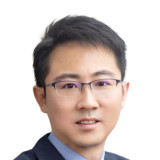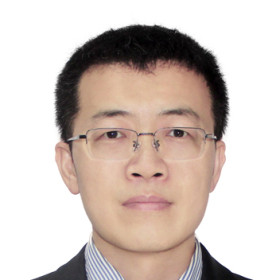
Prof. Zhiwen ZHANG
Department of Mathematics
The University of Hong Kong
Biography
- Associate Professor in Department of Mathematics at The University of Hong Kong
- Research interests include applied and computational mathematics, particularly in modeling, analysis, and the development of numerical methods for partial differential equations (PDEs) and stochastic differential equations (SDEs) arising in science and engineering
- RFS project — Convection-diffusion type partial differential equation (PDE) systems are important research areas in applied and computational mathematics, with profound implications across diverse fields such as environmental science, chemical engineering, biology, and medical sciences. Accurately solving these PDE systems is essential for simulating real-world phenomena. However, the solutions to many convection-diffusion PDE systems often exhibit large gradients or concentrations at unknown locations, posing significant challenges for mesh-based methods like finite element methods and finite difference methods. This project aims to address these challenges by developing interacting particle-field (IPF) methods and analyzing their convergence and efficiency. In addition, this project will develop a deep particle (DP) method that integrates deep learning, optimal transport, and particle-based computational methods. Furthermore, this project will conduct numerical simulations to solve application problems arising from biomedical and engineering sciences.
- Awards and Honours:
- RGC Research Fellow (2025)
- Outstanding Young Researcher Award of HKU (2022)
Project Title
- Efficient Particle-based Computational Methods and Deep Learning Methods for Convection-diffusion PDE Systems and their Scientific Applications
Award Citation
Dr Zhang has been working in the field of scientific computing with highly recognized achievements. He has developed many efficient numerical methods to solve challenging problems arising in science and engineering. For instance, he developed structure-preserving particle methods to compute effective diffusivity in chaotic and random flows. In addition, he developed an interacting particle method that accurately computes the principal eigenvalues of elliptic operators. Being spatially mesh-free and self-adaptive, the particle-based methods are particularly suitable for solving PDEs with low regularity and high dimensionality. In addition, Dr Zhang has made significant progress in developing deep neural network (DNN)-based methods to solve PDEs, which has gained significant interest.
Dr Zhang has published more than 60 papers in the fields of scientific computing, numerical analysis, and deep learning, many of which have been published in top journals within his research area, such as the SIAM Series Journals, Math. Comp., CMAME, and JCP. These works have generated broad impacts on the scientific computing community. He has been invited to give talks at many international conferences, including SIAM conferences and the 8th International Congress of Chinese Mathematicians. In recognition of his research contributions, he was awarded the Outstanding Young Researcher Award by HKU in 2022.
Dr Zhang also actively serves the academic community. He represented Hong Kong as a member of the Executive Committee of the East Asia Section of the Society for Industrial and Applied Mathematics (EASIAM). He was elected as the Secretary of the Executive Committee for the term 2023-2024, and is currently the Vice-President of EASIAM.