
Prof. Jianzhen YU
Department of Chemistry
The Hong Kong University of Science and Technology
Biography
- Chair Professor in Department of Chemistry at The Hong Kong University of Science and Technology
- Research interests include atmospheric analytical chemistry; development of analytical methods for atmospheric measurements; chemical characterization of urban and continental aerosols; transformation of organic compounds in air; source apportionment of air pollutants; and kinetic modeling of atmospheric reactions
- SRFS project — aims to employ advanced mass spectrometry and chemometric analysis to study these elements at multiple levels, from broad organic/inorganic separation with high mass completeness to detailed molecular identification. By integrating these multi-level techniques, the research will provide a wholistic picture of aerosol chemical composition and uncover previously undetected molecular species. This strategy has the potential to make significant and innovative advances in aerosol chemistry and the broader field of environmental chemistry.
- Awards and Honours:
- RGC Senior Research Fellow (2025)
- Fellow, Asian Aerosol Research Assembly (AARA) (2022)
- Distinguished alumna award, Department of Environmental Sciences & Engineering, Univ. North Carolina-Chapel Hill (2021)
- School of Science Service Award, HKUST (2018)
- Atmospheric Chemistry Colloquium for Emerging Senior Scientists (ACCESS)/Gordon Research Conference (1997)
Project Title
- Analytical Chemistry of Multi-level Chemical Speciation of C, N, and S in Atmospheric Aerosol Samples
Award Citation
Understanding what atmospheric aerosols are made of is essential for predicting their environmental and health impacts and for designing effective mitigation. A complete picture requires both a full accounting of all aerosol mass (“mass completeness”) and detailed identification of individual molecules—two goals that past studies rarely achieve together, especially neglecting mass completeness.
This project bridges that gap by combining advanced mass spectrometry with chemometric analysis to characterize carbon (C), nitrogen (N), and sulfur (S) across multiple levels: from broad organic/inorganic separation with high mass coverage to ion fragments-based polytomous speciation, then detailed molecular identification using ultra-high-resolution mass spectrometry and hyphenated chromatography–mass spectrometry.
This project will address three challenges:
(1) Tools for dichotomous speciation of organic/inorganic components are underdeveloped, limiting comprehensive elemental analysis. Building on recent advances in programmed thermal evolution and multivariate curve resolution for nitrogen, this project will extend these methods to C and S and develop a prototype instrument for simultaneous dichotomous speciation of all three elements;
(2) Calibration for ion-fragment-based polytomous speciation is insufficient for real-world aerosols. This project will pool well-characterized filter samples collected nationwide to create diverse “reference mixtures” of aerosol materials to improve calibration accuracy; and
(3) The fraction of unknown molecular species not captured by current molecular techniques is unquantified. Applying our multi-level speciation suite, this project will quantify the extent of these uncaptured molecules.
The ultimate goal is an integrated, multi-level chemical speciation framework that achieves both comprehensive mass coverage and high molecular specificity. By drawing on decades of experience and state-of-the-art tools, this work will fill critical knowledge gaps and advance aerosol and environmental chemistry.
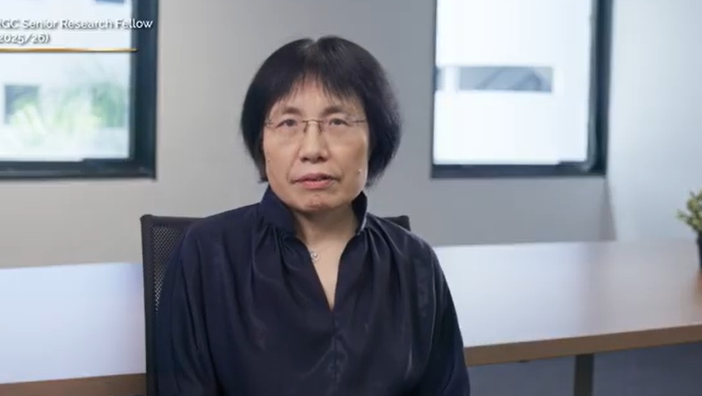
Short video of awardee