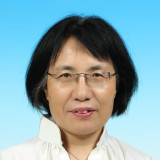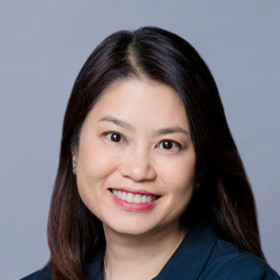
Prof. Lai Kwan PANG
Department of Cultural and Religious Studies
The Chinese University of Hong Kong
Biography
- Professor in Department of Cultural and Religious Studies at The Chinese University of Hong Kong
- Research interests include Critical Theories, Critical Humanities, Modern and Contemporary China, Hong Kong, Visual Studies, and Legal Humanities
- SRFS project — to examine the development of a new sense of self, or the formation of a modern subject, in Late Qing and Early Republican China, during the country’s pivotal transition towards a nation state. The project will study a wide range of intellectual writings from leading thinkers of the time, the everyday lives of ordinary people and current international geopolitics. It will combine intellectual, social and cultural history to analyze the interactions among various forces and actors within China and globally. This research will benefit not only scholars focusing on the Late Qing period but also offers a non-Western perspective on modern subject formation, potentially reshaping existing theories and shedding light on ongoing global changes.
- Awards and Honours:
- RGC Senior Research Fellow (2025)
- Fellow, Center of Advanced Studies of Behaviour Sciences (CASBS), Stanford University, 2021-2022
- ALA CHOICE 2020 Outstanding Academic Title, 2021
- Discovery International Award, Australia Research Council, 2015
- Chiang Ching-kuo Foundation Publication Award, 2012
Project Title
- An Interdisciplinary Approach to Explore the Rise of the Modern Chinese Subject in Late Qing China
Award Citation
Professor Pang Lai Kwan is Choh-Ming Li Professor of Cultural & Religious Studies at the Chinese University of Hong Kong. She has authored eight academic books, and the more notable ones include One and All: The Logic of Chinese Sovereignty (Stanford UP, 2024), The Art of Cloning: Creative Production During China’s Cultural Revolution (Verso, 2017), Creativity and Its Discontents: China’s Creative Industries and Intellectual Property Rights Offenses (Duke UP, 2012), and The Distorting Mirror: Visual Modernity in China (University of Hawai‘i Press, 2007). Her books received the American Library Association (ALA) Choice Outstanding Academic Title and Chiang King-Kuo Foundation Publication Award, and one was also selected in the Knowledge Unlatched list for global open access. She was a CASBS Fellow (2021-2022) at Stanford University. The research project that she conducts under the SRFS examines the development of a new sense of self, or the formation of a modern subject, in Late Qing and Early Republican China, during the country’s pivotal transition towards a nation state. The modern subject that emerged during this period was characterized by significant anxiety, curiosity and uncertainty.
The project studies a wide range of intellectual writings from leading thinkers of the time, the everyday lives of ordinary people and current international geopolitics. It combines intellectual, social and cultural history to analyze the interactions among various forces and actors within China and globally. This research benefits not only scholars focusing on the Late Qing period but also offers a non-Western perspective on modern subject formation, potentially reshaping existing theories and shedding light on ongoing global changes.
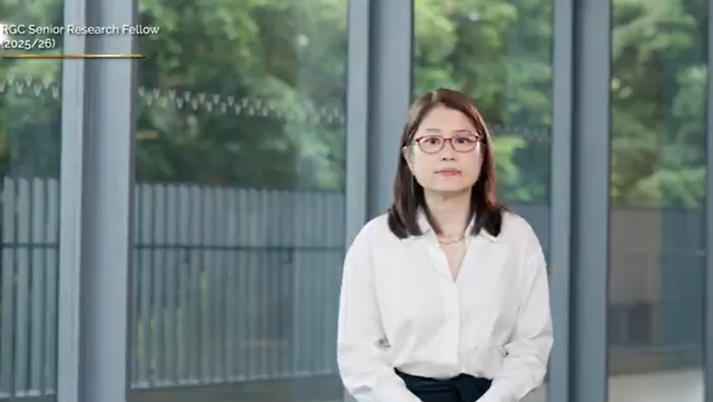
Short video of awardee